
Mindi Wood Furniture Manufacturer, Supplier, and Exporter Indonesia
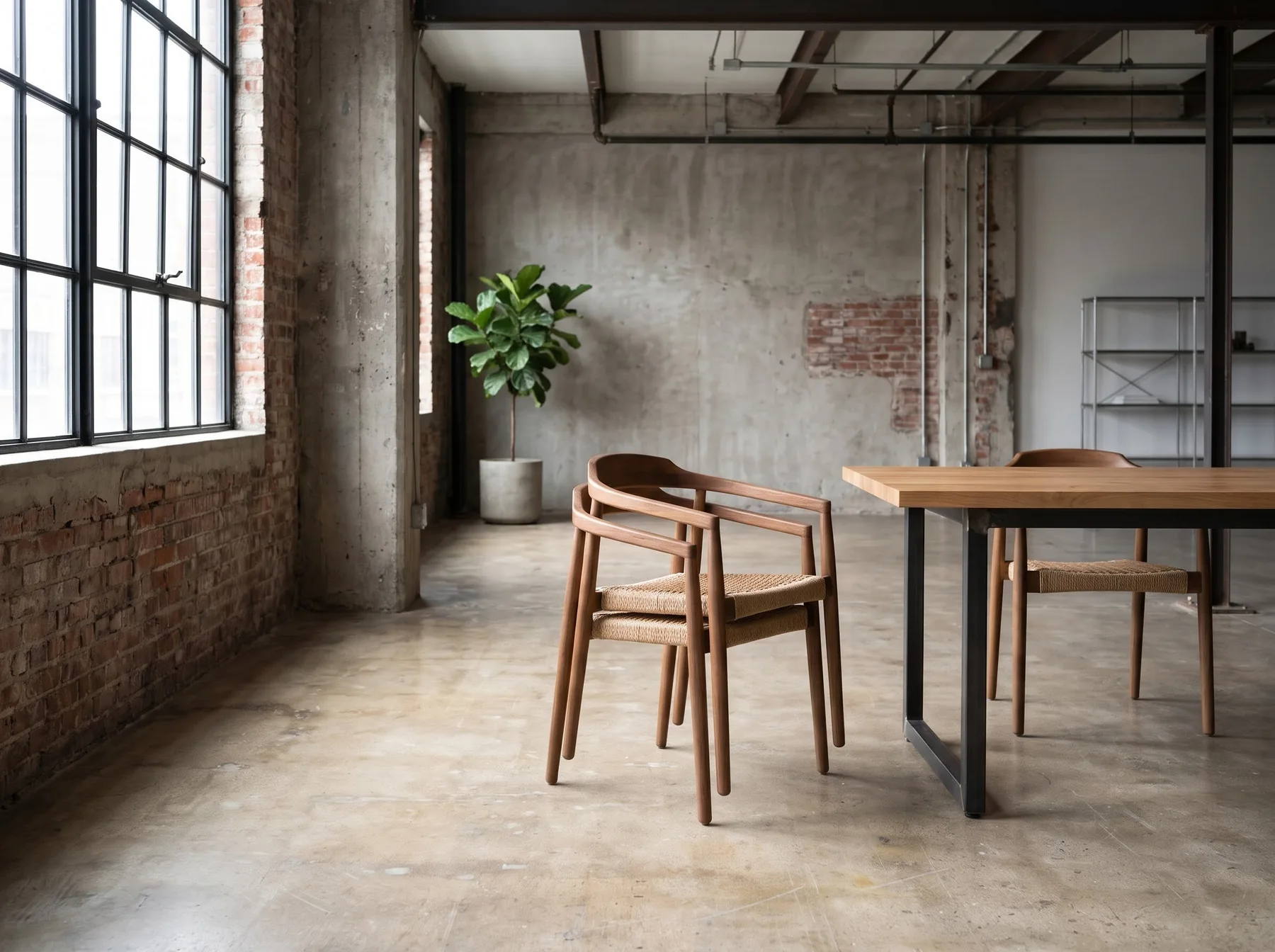
Indonesia is the largest supplier of mindi wood furniture to Europe, the UK, Australia and the United States, and most of that production sits in a handful of districts in Central Java — the cluster Tertuju works from as a mindi wood furniture manufacturer and exporter. This page covers the part of the relationship that begins after a design is agreed: what a factory can actually build, how a batch is controlled while it is being built, and what documentation travels with the container.
If the direction of the collection itself is still open — silhouettes, finishes, the preferences buyers are expressing in 2026 — that is a design conversation, and it is covered separately in our guide to emerging trends in mindi wood custom chairs. Here we stay on capacity, process, quality control and shipping.
What a mindi wood furniture manufacturer builds
Production is organised around three families: seating, tables and case goods. Chairs and benches run on a separate line from case goods, which matters the moment a container has to mix both — the two lines can be scheduled in parallel instead of one waiting for the other.
- Dining chairs, armchairs and stools — stackable and fixed frames, mindi solid throughout
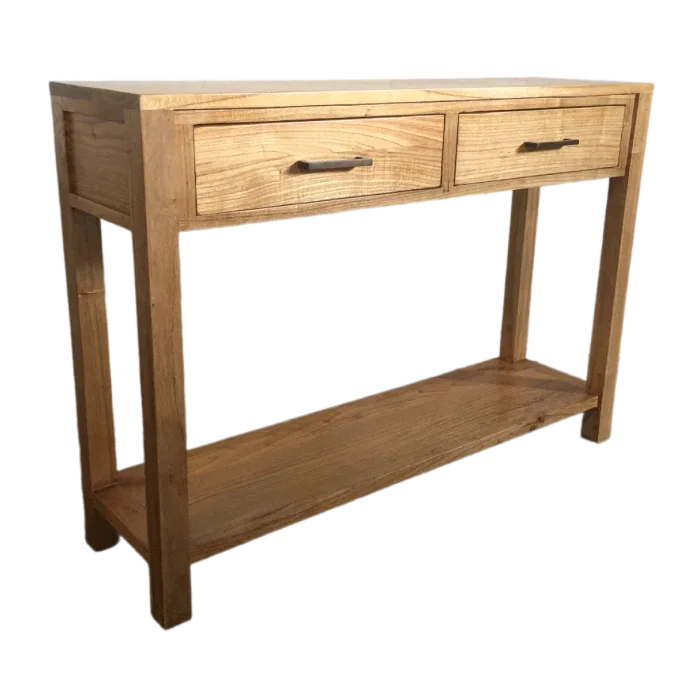
- Dining tables, console tables, coffee tables and benches, including slated and extendable tops
- Case goods: chests of drawers, sideboards, buffets, TV stands, book racks and shoe racks
- Rattan and solid-door variants of the same carcass, so a range can be presented as a family
- OEM and ODM builds against a drawing, a technical file or a reference sample


Capacity and order flow
Every order moves through the same five stages, and each one ends at a document you can hold us to: quotation, physical sample, purchase order with material allocated, production with in-line inspection, and final random inspection before loading. The value of that sequence is not ceremony — it is that a problem caught at stage two costs a sample, while the same problem caught at stage five costs a container. A mindi wood furniture manufacturer that runs seating and case goods in the same cluster can schedule a trial batch and a production batch within the same month, which is what makes a first order testable without adding a second supplier.
What minimum order does a mindi wood furniture manufacturer accept?
- A mixed container is a normal starting order; a single SKU does not have to fill the whole box
- New production typically runs 60–90 days from sample approval, and repeat orders inside that window are faster because tooling and material are already committed
- Lead time is committed against your delivery window rather than against an optimistic average, which occasionally means saying no to a date
- Seasonal programmes are scheduled backwards from the retail floor date, including the ocean transit leg
Material control: drying and grading
Mindi for export is kiln-dried to a maximum moisture content of 15 percent before machining. That single number decides whether a sideboard arrives flat or arrives with a lifted door, because the wood will keep losing moisture in a dry European winter and moving until it reaches equilibrium with the room. Boards are graded for colour and defect before cutting, and colour is matched per batch rather than per board, so a container does not read as three different furniture collections.
Raw material comes from managed plantations in Central Java, East Java and parts of Sumatra, where the harvest cycle is short enough to keep supply stable without drawing on natural forest. Species and origin are documented per batch — the paperwork buyers now ask for before the first purchase order, not after.
Construction, joinery and quality control
We propose the joint schedule at sample stage instead of after approval. Which joints carry load, where the frame is meant to flex, and which parts a hotel maintenance team will need to replace are decisions that belong on paper before the first production run — a chair built so a back leg can be unbolted and replaced survives a decade of contract use, and one that is glued shut does not.
Quality control runs in three gates: the approved pre-production sample as the reference, in-line inspection while the batch is being assembled, and final random inspection on packed cartons before loading. Inspection findings are photographed against the approved sample, so a dispute is settled by comparison rather than by opinion.
Finishing systems
Finishing is water-based or low-VOC, and the schedule matters more than the product name: sanding to 180 grit, a wash coat to seal the growth rings, then stain, then an open-pore lacquer. Skip the wash coat on mindi and a dark stain blotches across the early wood; wire-brush the surface first and the grain reads through the colour instead of sitting under it. Physical finish samples are sent before production because a colour approved on a screen is not a colour.
Export documentation and logistics
- Commercial invoice and packing list, per carton and per container
- Species and legal-origin documentation for the timber in the batch
- Phytosanitary certificate, with heat treatment or fumigation where the destination requires it
- Loading plan that accounts for detachable legs, nesting and stack height, so volumetric weight is not paid for air
- Incoterms quoted as FOB or CIF against your named port, with the forwarder nominated on your side where you prefer it
Sampling and pre-production
A sample is made before the purchase order, from the same material and on the same line as the production run. It is the cheapest point in the whole process to change a proportion, a radius or a finish, and the last point where a change costs nothing but a sample. Once the sample is signed off it becomes the reference for inspection, which is why we photograph it from every angle before packing it.
What we need from you to quote
- A design file, a technical drawing, or three to five reference images
- Target volume per SKU, and the expected annual volume for the collection
- Dimensions, including any fixed dimension taken from the table or the room the piece has to fit
- Finish specification, including sheen level and whether a physical sample is required
- Destination port, Incoterm and the delivery window you are planning against
With those five inputs we can confirm capacity for your window, propose a construction and joint schedule, and commit to a lead time measured against your delivery date rather than against an average. Send them through the request a quote form and the answer comes back as a quotation with a sample plan attached, not as a brochure.
Start with a drawing
If the design is settled, the fastest path is a drawing and a volume. If it is not, start with the 2026 design directions and come back when the silhouette is decided — the production conversation is easier once there is something specific to produce.
Where the production happens
Central Java has been the centre of Indonesian wood furniture for centuries, and the reason is not cheap labour — it is depth of skill. Sawmills, kiln operators, carvers, finishers and metal-hardware suppliers sit within a short drive of each other, so a change in a joint or a hardware specification does not wait for a shipment from another island. That density is also what makes small batch runs practical: a hundred chairs in a non-standard depth can be absorbed into the schedule without stopping a line.
Labour is generational. Carving and hand-finishing are still taught by apprenticeship, which is why a carved motif specified for one project can be reproduced two years later on a reorder, and why the person doing the finishing has usually done it for a decade rather than a season.
Questions buyers ask before the first order
Is mindi suitable for contract and hospitality projects?
For indoor contract use, yes – with a repairable joint schedule and a finish that can be touched up on site. The limiting factor is moisture and direct weather, not load, so outdoor and semi-outdoor seating is specified in teak or sungkai instead.
Can a container mix chairs and case goods?
Yes. Seating and case goods run on separate lines, so they are scheduled in parallel and consolidated at loading. Mixed containers are the normal shape of a first order from a retailer testing a collection.
Who owns the design and the tooling?
The buyer. Drawings, samples and any dedicated jigs made for a design stay with that programme, and we do not reproduce a buyer’s design for another client.
How does a mindi wood furniture manufacturer handle a first batch that is not right?
Final inspection happens on packed cartons before loading, against the approved sample, with photographs. Anything that fails is rebuilt or reworked before it ships – correcting a container at the destination costs a multiple of correcting it here.